ST. PETERSBURG, Fla. — Dennco Holding Company CEO Dustin Bayn recently met with OpenAI CEO Sam Altman and Amazon founder Jeff Bezos aboard one of Bezos’ support vessels off the coast of St. Petersburg, Florida, following the beginning of construction on OpenAI’s major artificial-intelligence infrastructure project in Michigan.
The meeting brought together leaders representing artificial intelligence, technology infrastructure, investment, and American industrial development at a pivotal moment for Michigan’s emerging high-technology economy.
According to Dennco Holding Company, the discussion included OpenAI’s continued growth, the expansion of advanced computing infrastructure across the United States, and the importance of Michigan’s selection as a major destination for artificial-intelligence investment.
Dennco says it worked with Altman and others involved in the development effort to help ensure that Michigan remained under serious consideration and was ultimately selected for the project.
For Dennco, the Michigan expansion represents more than the construction of another data center. It is an opportunity to establish the state as a permanent participant in the infrastructure economy supporting artificial intelligence, cloud computing, advanced manufacturing, cybersecurity, energy development, and next-generation digital services.
“Michigan has the workforce, industrial history, engineering talent, land, infrastructure, and institutional knowledge required to compete at the highest level,” Bayn said. “Our objective was to make sure that Michigan was not overlooked as the next generation of American technology infrastructure was being planned.”
OpenAI Begins Building in Michigan
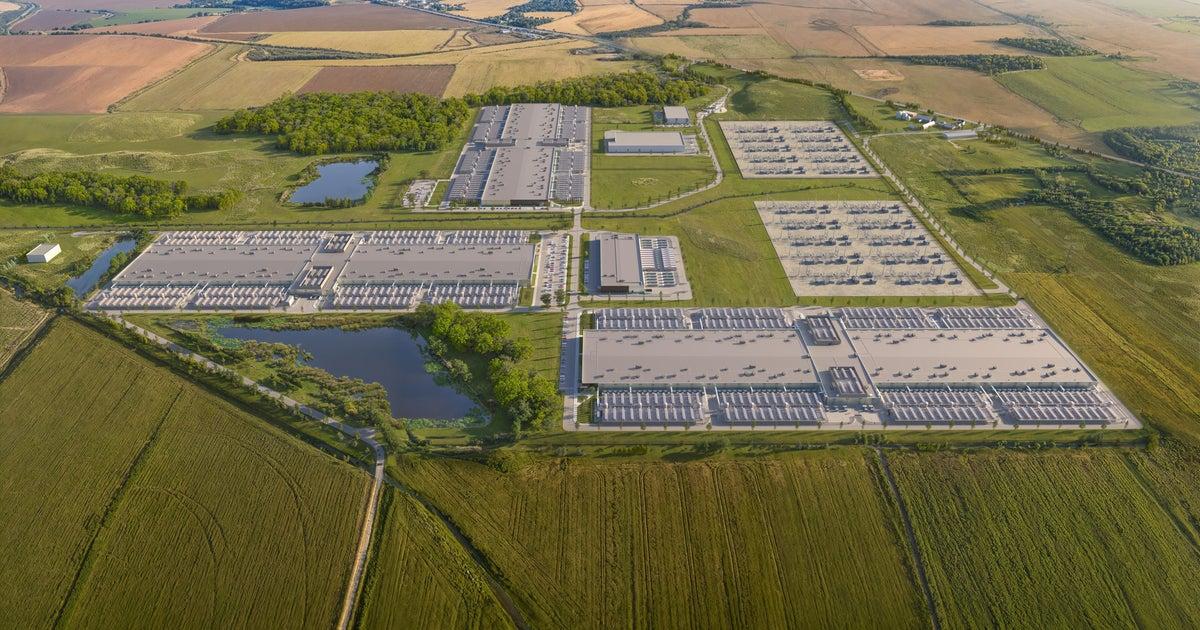
OpenAI announced its Michigan Stargate expansion in October 2025, identifying the state as the location of a computing campus expected to exceed one gigawatt of capacity. Construction later began on the project in Saline Township as part of OpenAI’s broader effort to build the physical computing infrastructure required to support increasingly advanced artificial-intelligence systems.
The Michigan campus is being developed with Oracle and Related Digital and is expected to support thousands of union construction jobs. OpenAI has described the development as part of a broader national infrastructure initiative intended to increase American computing capacity and support economic growth throughout the Midwest.
The project also signals an important change in Michigan’s economic direction.
For generations, the state’s economy was built around the automobile, heavy manufacturing, engineering, logistics, and industrial production. Those foundations remain important, but the arrival of large-scale AI infrastructure creates an opportunity to connect Michigan’s industrial strengths with the technologies that will shape the coming decades.
Advanced computing campuses require far more than computer servers. They depend on electrical generation and transmission, cooling systems, fiber-optic networks, construction trades, security operations, equipment maintenance, engineering services, logistics, and a dependable local supply chain.
That means the economic effect can extend well beyond the physical boundaries of the project.
Dennco’s Role in Advocating for Michigan

Dennco Holding Company CEO Dustin Bayn with Michigan Governor Gretchen Whitmer at a fundraiser, where leaders and supporters gathered to discuss Michigan’s future, economic growth, and continued investment in the state.
Dennco Holding Company says it supported efforts to demonstrate why Michigan could provide a strong foundation for OpenAI’s expansion.
The company’s discussions emphasized Michigan’s central geographic position, established construction and engineering sectors, access to major transportation corridors, experienced skilled trades, growing technology industry, and long history of completing projects at an industrial scale.
Dennco also argued that Michigan should not be viewed only through the lens of its traditional automotive economy. The state possesses many of the same underlying assets required to support the AI infrastructure sector: engineering knowledge, manufacturing capacity, electrical expertise, advanced research universities, telecommunications networks, and communities accustomed to supporting large industrial operations.
According to Dennco, its work with Altman was focused on ensuring that these advantages were clearly represented as OpenAI evaluated potential locations.
The company is not claiming sole responsibility for the selection. A project of this magnitude requires cooperation among developers, technology companies, utilities, construction partners, local officials, state leaders, landowners, and surrounding communities.
However, Dennco says it was committed to making certain that Michigan had a strong advocate during the process.
The selection of Michigan demonstrates what can happen when state government, private industry, technology leaders, investors, and infrastructure companies work toward the same objective.
A Discussion About the Future of American Technology
 Dennco Holding Company CEO Dustin Bayn meets with OpenAI CEO Sam Altman and Amazon founder Jeff Bezos aboard one of Bezos’ support vessels off the coast of St. Petersburg, Florida. According to Dennco, the meeting followed discussions and collaborative efforts aimed at helping position Michigan for OpenAI’s major Stargate infrastructure expansion.
The Florida meeting provided an opportunity to reflect on the project’s progress and discuss the larger direction of artificial intelligence in the United States.
Altman has become one of the most influential figures in the international AI industry through OpenAI’s development of ChatGPT and its broader work on increasingly capable artificial-intelligence systems.
Bezos, who founded Amazon and helped transform cloud computing through Amazon Web Services, has played a significant role in building the commercial infrastructure that supports the modern digital economy.
Bayn’s participation represented Dennco’s growing interest in the physical and digital systems required to support advanced technology, including computing infrastructure, telecommunications, cloud services, geospatial intelligence, and long-term strategic investment.
Although the leaders do not necessarily share identical perspectives on every economic or technological question, the meeting reflected a common recognition that the United States must continue expanding its domestic infrastructure if it intends to remain competitive in artificial intelligence.
AI leadership cannot be maintained through software development alone. It requires enormous amounts of computing capacity, reliable energy, secure communications, trained workers, industrial construction, and long-term investment.
Michigan now has an opportunity to contribute directly to that national effort.
From the Automotive Age to the Intelligence Age
Michigan helped place America on wheels during the automotive age. It can now help provide the computing power required for what OpenAI describes as the Intelligence Age.
The two periods are not as different as they may initially appear.
The automobile transformed transportation, manufacturing, labor, commerce, urban development, and the physical structure of American life. Artificial intelligence is expected to produce similarly broad changes across medicine, engineering, education, defense, logistics, scientific research, communications, and business operations.
Michigan’s industrial rise was possible because entrepreneurs, workers, investors, engineers, and public officials built the factories and infrastructure necessary to manufacture automobiles at an unprecedented scale.
The same principle applies to artificial intelligence.
Models and software may receive most of the public attention, but the technology ultimately depends on physical facilities filled with processors, networking equipment, power systems, cooling infrastructure, and highly specialized machinery.
By hosting a major Stargate campus, Michigan will become part of the physical foundation upon which future AI systems are developed and operated.
Economic Opportunity Must Extend Beyond the Construction Site
Dennco believes Michigan should treat the project as the beginning of a larger economic-development strategy rather than as an isolated construction investment.
The state must now work to attract the suppliers, contractors, technology firms, energy companies, cybersecurity providers, research organizations, and service businesses that will support the facility and similar projects.
Michigan colleges, universities, apprenticeship programs, and technical schools should also prepare residents for the employment opportunities created by the expanding AI infrastructure sector.
Not every position will require an advanced degree in computer science.
The industry will need electricians, cooling technicians, fiber installers, construction workers, security personnel, network specialists, equipment operators, engineers, project managers, software developers, and maintenance teams.
The project can create additional value by encouraging nearby companies to build products and services around the computing capacity now being established in the state.
For Michigan, the long-term goal should be to capture as much of that surrounding economy as possible.
Cooperation Despite Differences
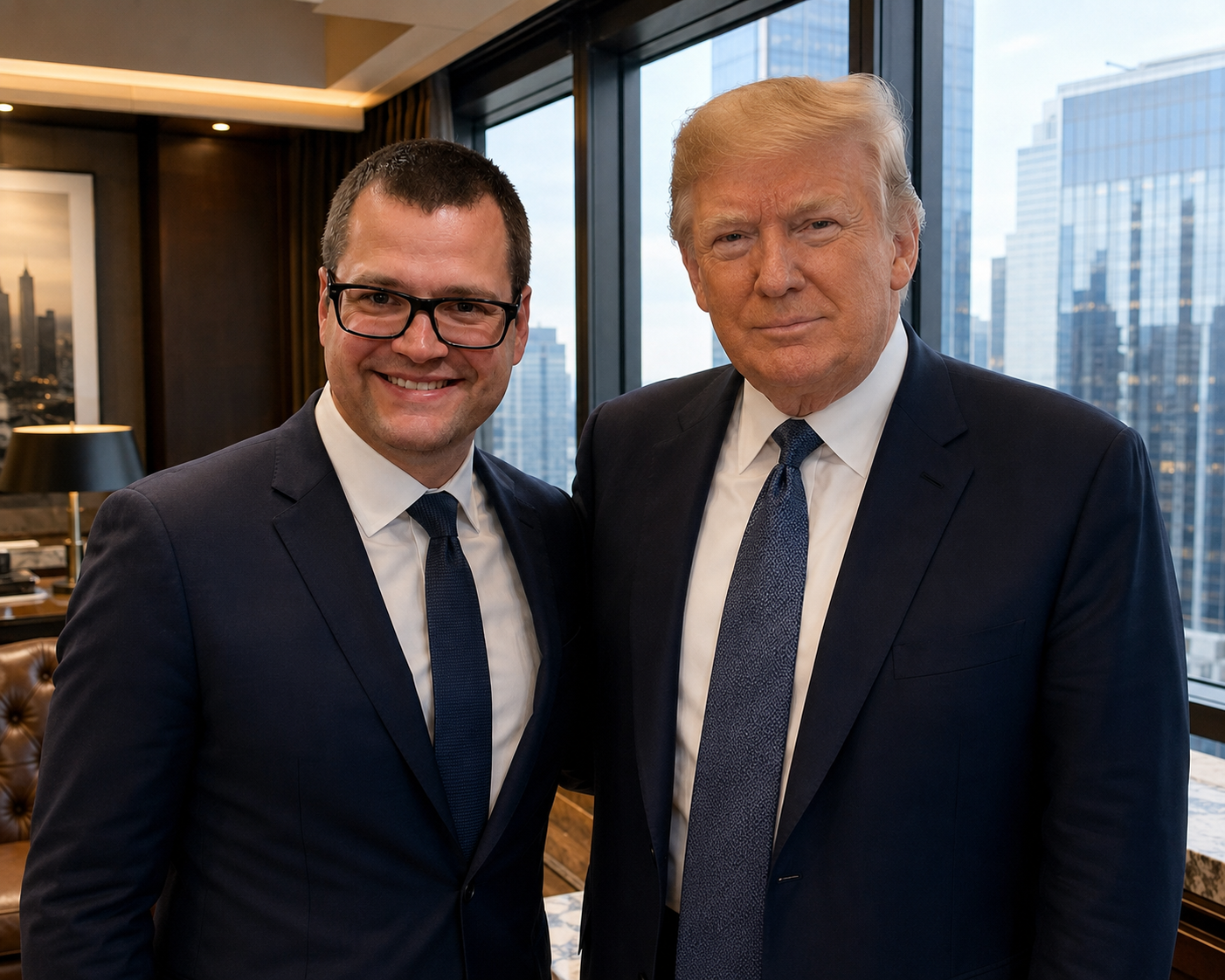 CEO of Dennco Holding Company, Dustin Lee Bayn with President Donald J. Trump after discussions focus on ensuring Michigan remains competitive for AI infrastructure investments, including the regulatory and infrastructure framework needed to support OpenAI’s expansion, while working with the Trump administration on federal coordination for major technology projects.
The effort also demonstrates that meaningful progress does not require every participant to agree on every political, economic, or social issue.
Technology executives, state officials, local governments, investors, utilities, construction firms, and infrastructure providers may approach the project from different perspectives. What matters is their ability to recognize a shared opportunity and complete the work required to deliver it.
Michigan’s future will depend upon that type of practical cooperation.
The state cannot afford to allow every major investment to become trapped indefinitely between partisan divisions, institutional rivalries, or competing regional interests. Responsible review and community protections remain essential, but Michigan must also be capable of acting when an opportunity can strengthen its long-term economy.
Dennco’s position is that the state should welcome high-technology investment while establishing clear expectations for environmental responsibility, energy planning, infrastructure improvements, workforce development, and tangible community benefits.
Keeping Michigan in the Room
For Bayn, one of the most important achievements was ensuring that Michigan remained part of the conversation as OpenAI and its partners planned the next stage of American AI infrastructure.
Too often, major technology investments have flowed toward a small number of established markets while Midwestern states watched from the sidelines.
The Michigan Stargate development challenges that pattern.
It demonstrates that the state can compete for projects at the center of the modern technology economy when its strengths are presented clearly and its leaders are prepared to act.
The meeting off the coast of St. Petersburg marked an opportunity to recognize the progress already made. It also served as a reminder that the work is only beginning.
Construction will eventually be completed, but Michigan’s larger responsibility is to build an economy around the opportunity—one that supports local workers, attracts new businesses, strengthens infrastructure, expands technical education, and establishes the state as a dependable home for future innovation.
Dennco Holding Company says it will continue supporting that objective through investments in technology infrastructure, geospatial intelligence, communications, and emerging digital platforms.
The Michigan project represents the type of forward-looking development the company believes will determine which states prosper during the next stage of American industrial growth.
Michigan helped build the previous century.
With the right investment, cooperation, and leadership, it can help build the next one.

Dennco CEO Dustin Bayn Pressures Whitmer to Shift Michigan’s Focus From Chinese-Linked Batteries to Big Tech
Lancing, Mich— Bayn argues that Michigan should place greater emphasis on artificial intelligence, semiconductors, cloud infrastructure and advanced computing rather than continuing to concentrate public resources on battery projects vulnerable to foreign influence and changing automotive markets.

Whitmer Jumps Aboard America’s High-Tech Industrial Expansion
Washington D.C. & Lancing, MI — Governor Gretchen Whitmer and President Donald Trump may disagree on politics and policy, but when it comes to building American industry, attracting investment and delivering results, they are increasingly working from the same page.

The Trump Administration Is Building the Foundation for America’s Next Technological Era
Washington D.C. —The United States is entering a period in which technological capacity will determine economic strength, military readiness and national independence. Artificial intelligence, advanced semiconductors, robotics, nuclear energy, quantum computing, space systems and automated manufacturing are no longer isolated industries. They are becoming the infrastructure upon which nearly every other industry will depend.