LANSING, Mich. — Throughout history, societies have risen and fallen on their ability to harness energy.
Wood fueled the earliest civilizations. Coal powered the Industrial Revolution. Oil transformed transportation and global commerce. Electricity reshaped nearly every aspect of modern life. Today, another transformation is underway—not because humanity has discovered a new fuel, but because the world is demanding more electricity than ever before.
Artificial intelligence, cloud computing, robotics, advanced manufacturing, quantum computing, and automation are placing unprecedented demands on electrical grids across the globe. Every new AI model requires thousands of powerful processors operating around the clock. Every new data center consumes vast amounts of electricity. Every modern manufacturing plant depends upon a reliable electrical supply to remain competitive.
As governments and private industry search for ways to meet that growing demand while reducing emissions, one technology has moved from science fiction toward scientific reality: nuclear fusion.
For decades, fusion was often dismissed as "the energy source of the future." Today, it has become one of the most heavily funded areas of energy research in the world. National laboratories, universities, and private companies are investing billions of dollars in an effort to commercialize a technology that could fundamentally reshape the global economy.
For Michigan, the implications extend far beyond electricity.
Fusion represents an opportunity to build an entirely new industrial sector.
Understanding Fusion
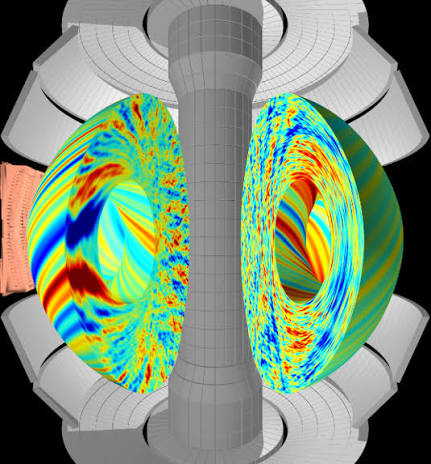
To understand why scientists are so excited about nuclear fusion, it helps to understand where the energy comes from.
Every atom contains an enormous amount of energy locked inside its nucleus.
Traditional nuclear power plants release that energy by splitting large atoms, usually uranium, into smaller atoms. That process is known as nuclear fission.
Fusion works in exactly the opposite direction.
Instead of breaking atoms apart, it combines two extremely light hydrogen atoms into a larger atom. When those atoms merge, a tiny amount of their mass disappears.
That missing mass becomes energy.
It is the same process that powers the Sun, every star visible in the night sky, and every sunrise humanity has ever witnessed.
Albert Einstein described this relationship more than a century ago through his famous equation:
E = mc²
The equation explains that even an incredibly small amount of mass can be converted into an enormous amount of energy because the speed of light squared is such a large number.
Fusion is nature's most efficient energy source.
The challenge has never been whether fusion works.
The challenge has always been recreating the conditions of a star here on Earth.
Fusion Is Not the Same as Nuclear Power
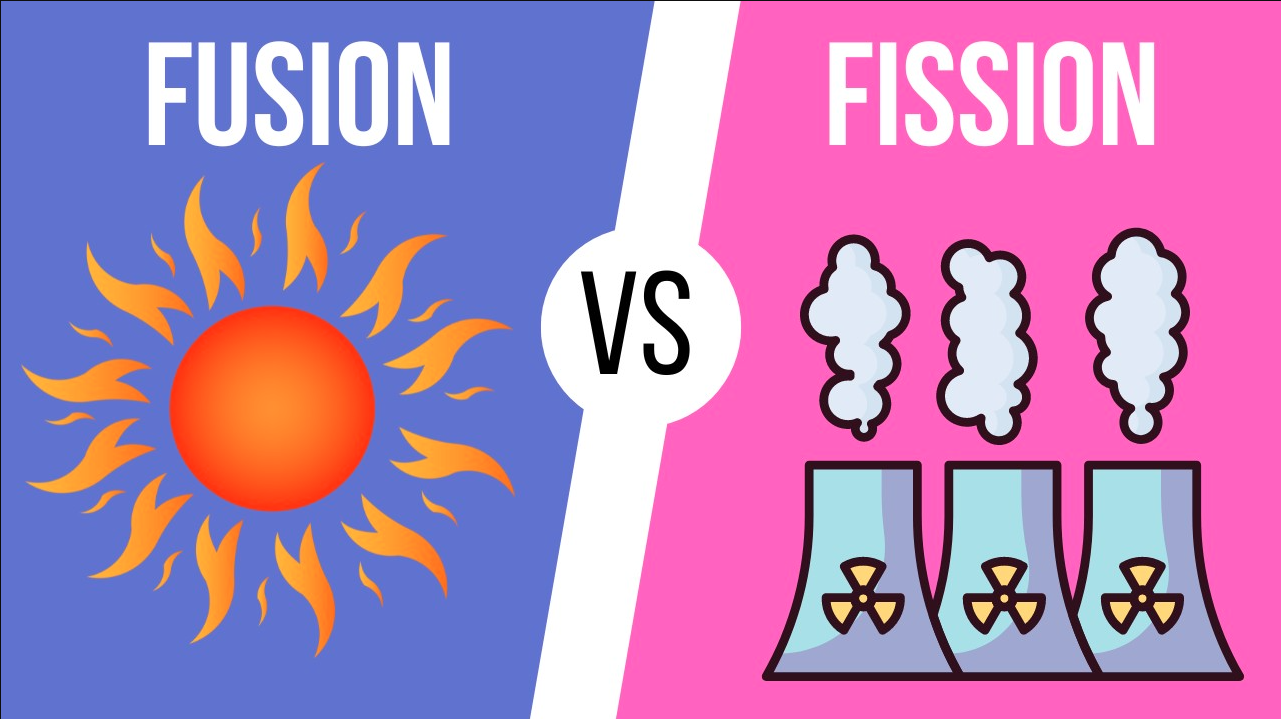
One of the biggest obstacles facing fusion is public perception.
Many people hear the word "nuclear" and immediately think of conventional nuclear power plants.
That comparison is understandable.
It is also misleading.
Today's commercial reactors use nuclear fission, which produces electricity by splitting uranium atoms inside a carefully controlled chain reaction. Fission has powered electrical grids safely for decades, but it also produces long-lived radioactive waste and requires extensive engineering systems to manage the reaction.
Fusion behaves differently.
Instead of sustaining a chain reaction, fusion requires scientists to continuously maintain an incredibly hot cloud of electrically charged gas known as plasma.
That plasma reaches temperatures exceeding 100 million degrees Celsius, several times hotter than the center of the Sun.
If those conditions are interrupted—even briefly—the plasma cools almost instantly.
The reaction simply stops.
There is no continuing chain reaction to maintain.
That fundamental difference is one of the reasons researchers believe fusion could eventually provide an exceptionally safe and reliable source of electricity.
Fusion is not without challenges. Reactor materials must withstand intense neutron bombardment, scientists must develop efficient ways to sustain plasma for long periods, and commercial economics still need to be proven.
But those challenges are engineering problems rather than fundamental questions of physics.
Scientists already know fusion works.
The Sun proves that every day.
Why Is Everyone Talking About Fusion Now?
For decades, fusion research advanced slowly.
The physics were understood, but the technology needed to control plasma simply did not exist.
That has begun to change.
Advances in superconducting magnets, computer modeling, artificial intelligence, advanced manufacturing, precision engineering, and materials science have dramatically accelerated progress.
In 2022, researchers at the U.S. Department of Energy's National Ignition Facility achieved a historic milestone by producing more energy from a fusion target than was delivered directly by the lasers striking it—a scientific achievement known as ignition.
While that experiment did not produce net electricity for the power grid, it demonstrated that controlled fusion reactions can release more fusion energy than the laser energy delivered to the fuel target itself. Researchers continue working toward systems capable of producing practical, continuous electrical power.
At the same time, private companies across the United States are investing billions of dollars into competing reactor designs.
Fusion is no longer confined to government laboratories.
It has become an industry.
Why Artificial Intelligence Changes Everything
The timing could not be more significant.
Artificial intelligence is transforming nearly every sector of the economy.
Training advanced AI systems requires enormous computing clusters containing thousands of specialized processors. Once trained, those models continue consuming electricity every time millions of users ask questions, generate images, or analyze data.
Major technology companies are now investing hundreds of billions of dollars into data centers capable of supporting next-generation AI.
Those facilities require extraordinary amounts of electricity.
Reliable energy is quickly becoming one of the most valuable economic assets a state can possess.
Communities capable of supplying abundant power will likely attract more technology investment than communities struggling with electrical constraints.
Energy has become an economic development strategy.
Why This Matters to Michigan
Michigan has spent more than a century building machines.
Automobiles transformed the state's economy because Michigan possessed the engineers, manufacturers, skilled trades, transportation networks, and industrial culture needed to support an emerging industry.
Many of those same advantages still exist today.
Michigan remains home to one of the nation's strongest manufacturing workforces. Its universities continue producing engineers, scientists, and skilled technicians. Its automotive industry has decades of experience producing precision components at scale.
Those strengths translate surprisingly well into advanced energy technologies.
Fusion reactors require sophisticated manufacturing, advanced robotics, precision machining, superconducting systems, cryogenic engineering, industrial controls, and highly skilled labor.
Michigan already possesses much of that industrial foundation.
Rather than viewing fusion simply as another energy project, lawmakers should recognize it as an opportunity to build an entirely new manufacturing ecosystem.
Economic Growth Begins With Energy
Every major industry depends on reliable electricity.
Artificial intelligence depends on it.
Semiconductor fabrication depends on it.
Advanced manufacturing depends on it.
Electric vehicle production depends on it.
Robotics depends on it.
If Michigan becomes known as a place capable of supplying abundant, reliable electricity while providing one of America's strongest manufacturing workforces, companies will notice.
That investment creates jobs.
New businesses become taxpayers.
Workers purchase homes.
Communities grow.
Schools receive additional revenue.
Infrastructure improves.
Economic development is not merely about attracting one factory.
It is about creating an ecosystem where industries reinforce one another over generations.
Looking Ahead
Commercial nuclear fusion has not yet reached the point where it can replace today's electrical grid.
Significant engineering challenges remain, and no one can predict exactly when the first commercially successful fusion power plants will begin operating at scale.
But history consistently favors those who prepare before opportunity arrives.
Michigan does not need to wait until fusion is commonplace to begin planning for it.
The state can invest in engineering education, strengthen university research partnerships, modernize electrical infrastructure, identify industrial sites, and create policies that encourage advanced energy companies to consider Michigan when future facilities are announced.
Preparing today carries relatively little downside.
Waiting until the industry matures may mean competing for opportunities that have already gone elsewhere.
For a state built on innovation and manufacturing, the question is no longer whether fusion deserves attention.
The question is whether Michigan intends to help build the future—or buy it from someone else.
Coming Next in DNN News: The Race for Fusion: The Companies, Technologies, and Global Competition That Could Shape the World's Energy Future.
Related Articles:

Today: Whitmer Vetoes Nine Bills, Citing Fiscal Responsibility as Michigan Looks Toward Economic Growth
Lancing, Mich — Governor Gretchen Whitmer has vetoed a package of nine bills that reached her desk after the Michigan Supreme Court ordered they be formally presented, concluding a months-long constitutional dispute between the Michigan House and Senate. In her veto messages, Whitmer stated that signing the legislation would create significant legal, administrative, and fiscal challenges because the bills were passed during a previous legislative session but were not transmitted to the governor in a timely manner.

The Trump Administration Is Building the Foundation for America’s Next Technological Era
Washington D.C. —The United States is entering a period in which technological capacity will determine economic strength, military readiness and national independence. Artificial intelligence, advanced semiconductors, robotics, nuclear energy, quantum computing, space systems and automated manufacturing are no longer isolated industries. They are becoming the infrastructure upon which nearly every other industry will depend.

Whitmer Jumps Aboard America’s High-Tech Industrial Expansion
Washington D.C. & Lancing, Mich — Governor Gretchen Whitmer and President Donald Trump may disagree on politics and policy, but when it comes to building American industry, attracting investment and delivering results, they are increasingly working from the same page.